One year ago, my partner and I woke up at 4 am to walk the final kilometres of our month-long journey across Spain. We arrived in the town square, took off our backpacks and attempted to process what we had achieved: successfully completing the Camino De Santiago!
As I wrote in my blog, Call of the Camino, this was something that had been on my bucket list for almost a decade. Yet despite the achievement, I never wrote a follow-up blog. Once the jet lag wore off, and I remembered how to function in my day-to-day life after living out of a backpack for months, I tried to write something but struggled to find the words.
I was putting too much pressure on myself – wanting it to be perfect. Of course, I’ve spoken the Camino many times in person. But I’ve been silent, digitally, which I’m ready to change.
It was my fellow pilgrim-turned-friend, Holly, who inspired me with her YouTube Vlogs, as well as the process of compiling a travel photo album with my partner. It was too huge of an experience to try to share anything.
SO, HOW WAS IT?
The short answer to this question is: everything. And I truly mean that.
It was amazing – I loved the breathtaking views of mountains, coastlines, and forests; the deeply moving artwork and architecture; soulful conversations with fellow travellers from all over the world; learning about history; and the feelings of triumph at the end of each day.
It was frustrating – I didn’t find it easy to navigate a foreign country with a different language and customs. Or living out of a backpack that seemed to be shrinking as you attempted to jam another packet of biscuits in there. Then there was trying to find somewhat nutritious food, when asking for vegetarian options often got an eye-roll response.
It was hard – steep inclines through the mountains, tight muscles, chaffing, bed bug bites, allergies, blisters, poor sleeps in noisy bunks and desperately needing some rest but having to do yet another full day of walking leaving you questioning why you picked a hiking holiday through rural Spain over lazing by a pool in the city.
Overall, it was everything I expected it to be.
Challenges create opportunities for learning and growth. And as much as I complained – often asking my partner, “are we there yet?” like a backseat toddler, I wouldn’t have had it any other way. Though maybe she might have?
What I have here isn’t a day-by-day recount (I’m saving that for my second book, Home) but a collection of key reflections in no particular order. I hope you enjoy them along with the series of photos I’ve uploaded.
STEP BY STEP
How do you walk 700km? It’s not different to walking 70 or 7. You take things step by step. Otherwise, thinking too much about the mammoth task can break your confidence and enthusiasm.
I learned this within the first few hours, as the Camino starts with one of the most challenging days as you go up into the Pyrenees mountains to cross the French border.
I found “my zone” and I returned to it regularly. And since completing the Camino, I’ve found the skill to be transferable. Whenever I approach a big project or task, I just focus on my next step.
APPRECIATION OF HISTORY
A big part of the Camino is the history surrounding it. Regardless of whether you believe there is truth to its origin – with the body of the apostle, Saint James being discovered then buried in Santiago – there’s no debating the impact of this legend.
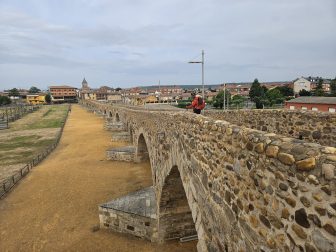
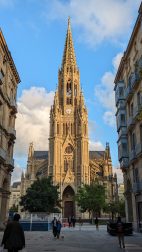
Walking through rural parts of Spain, past farming villages, statues, monuments, churches, and cathedrals, in the footsteps of many, both modern-day and medieval pilgrims, was a transcendent experience.
DIFFERENT SIDES TO RELIGION AND SPIRITUALITY
Being a Catholic Pilgrimage, I’d understand if you thought religion and the Camino were inseparable. Well, they certainly are. As I wrote previously, people embark on this pilgrimage for many reasons. My intention was to take on a challenge and to see parts of the new world. And I met many people with a similar mindset.
We were the majority – at least in my experience. But I also met religious pilgrims. The experience of walking was deeply moving for them. And while being inside the cathedrals, which I loved for their architecture, the effect of religion was also evident just by the fact that these beautiful buildings were made in tribute to the divine. It encouraged me to reflect on my own spirituality. And as I walked, I discovered the natural world to be my ‘church’.
LEARNING TO ROLL WITH THINGS
Walking the Camino forces you to be adaptable. Even if you plan ahead – like we did, booking all our accommodation in advance – you’re still going to deal with the unexpected and unknown.
That could be a rude albergue owner (Spanish for hostel), struggling to find places to eat or buy supplies, poor sleep on uncomfortable beds, leaving clothes behind, blisters and injuries or… bed bugs.
Sadly, I got a bad set of bites that caused me a few days of discomfort. Whatever the situation, you learn to make the most of what you have – even if it means doing your stinky laundry in a bathroom sink.
WALKING YOUR OWN RACE
You can feel pressured to stick to a schedule or keep up with other pilgrims – especially when they flex how many kms they walked. This mainly happens at the beginning when motivation is high. However, with time, everyone finds their own pace. I certainly did.
Although I struggled more than my partner and the others we walked with, I learned to be forgiving to myself. This allowed me to skip days without feeling guilty about it. I reminded myself that I’m here for a challenge, but that doesn’t mean punishing myself. And my accomplishments aren’t diminished by others doing more.
OUR COMMON HUMANITY
The Camino attracts people from all over the world. There’s a lot of diversity, but also things that are shared, such as the desire for adventure, our determination and camaraderie. You definitely realise how much we all have in common.
I was recently reflecting on this with someone who has also completed the Camino. He said the people he met on the road got to see a different side to him – a side his friends don’t.
I get what he means. And I can explain it by highlighting that on the Camino, it’s normal to be walking with someone for 10 minutes and already be hearing their life story. People just connect differently and look out for one another in a way that restores your faith in humanity.
SIMPLYFING LIFE
It goes without saying that when you’re living out of your backpack, you get a hard-hitting lesson in minimalism. By all means, you can indulge and bring along extra items, but you’ll be paying the price – and probably leaving them behind in your accommodation.
Waking the Camino was similar to my year living and volunteering in Tonga. I had a suitcase instead of a backpack, but I still had to be very intentional in what I deemed essential. I came back with an understanding that I don’t need as much as I thought to be happy.
Tonga was ten years ago, so the Camino was a good reminder of what I value. I don’t need no fancy shit. Give me nature, good friends, a strong coffee and a cheeky pastry, and I’m sweet.
DISCOVERING WHAT YOU’RE CAPABLE OF
After my experience of hiking to Mt Everest Basecamp and getting helicoptered out 3 hours from the destination, I headed to Spain with my expectations in check. After the first day of crossing the Pyrenees mountains, which is the hardest, I checked them even further. The gasps of air around me proved I wasn’t the only person struggling.
Even after finishing the first day, I was relieved, but still unsure about what was to come. This doubt stays with you because it only takes one badly placed step, out of the hundreds of thousands that you take, to put you out of action. And every day you’re pushing your body to new limits.
So, making it to the end was a massive relief and a feeling of triumph! For something like the Camino, however, it’s not just about the walking. The journey encompasses everything – from planning in the months leading up to the trip to making it possible in the first place.
The Camino had been on my bucket list for almost a decade at this point, and I worked really hard to take a total of 3 months off – going to visit several countries across Europe. This experience has given me the confidence that I can make my biggest dreams come true.
FOLLOW THE SIGNS
On the Camino, the path across Spain is marked by yellow arrows and shells in various forms. You never want to walk too far without seeing something – otherwise, you’re probably going the wrong way. You learn to pay attention, even while deep in conversation or your own thoughts.
You also learn to trust the unfolding of life. Some people call this God, The Universe, or just the way things are. Many pilgrims have their own stories about serendipitous surprises and being in the right place at the right time. There’s a reason it’s said that the Camino will provide.
CLOSING THOUGHTS
To conclude: Yes.
Yes, you walk the Camino – if you feel called. I emphasise that it’s something you have to be ready for. And even still, it will be a lot. There were plenty of days when I was just over it. But being pushed to that place is where I found the magic that is the Camino.
It was also in the coastlines, rolling hills, the beautiful cathedrals and artwork, the friendships made, the freedom from everyday life, and the relief of falling into a soft bed (and sometimes not so soft!) at the end of another long day of pushing myself.
I would do another Camino – though the logistics of finding the time off is a challenge. So if I actually will remains an unknown. However, one thing I’m holding onto is the notion that the Camino never truly ends.
This is because the journey isn’t just about arriving at Santiago, but rather the things you learn and experience along the way. And every day, even in my regular life in Australia, is a chance to reconnect with and integrate everything I’ve shared here.
Walking will never be the same – which I’m glad about. Because putting on my shoes and stepping outside is definitely easier than booking a flight to Spain.